
March 24, 2026
Speech in Bloom
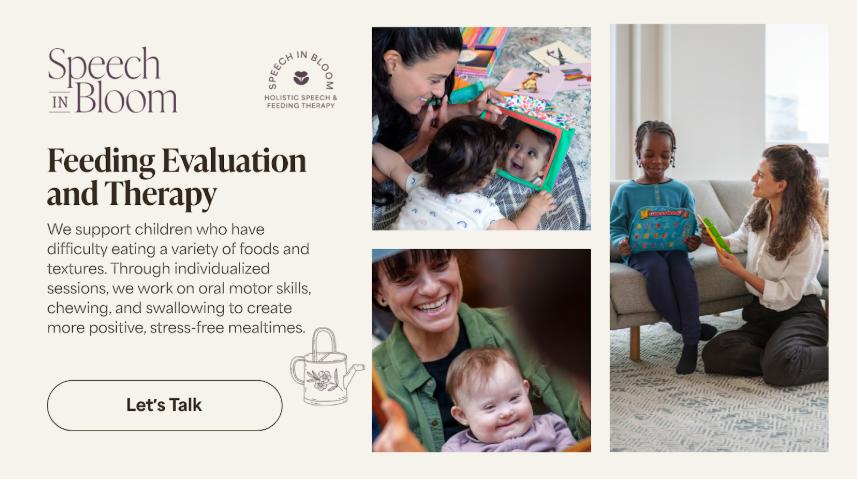
As a parent, you notice everything. When you experience the first time your child waves, babbles, or says your name, those moments can feel enormous. But what happens when something feels a little off? If your child isn’t quite reaching the milestones that seem to come easily for other kids their age, it’s perfectly okay to look into avenues to give your child extra support.
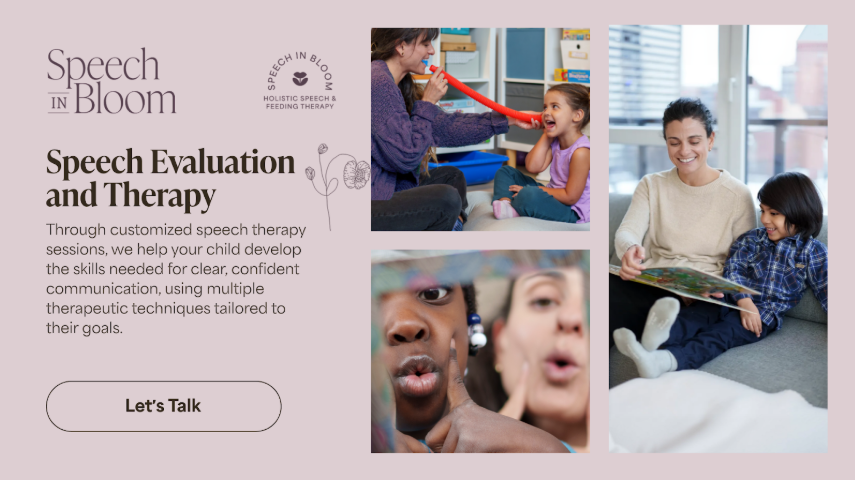
Thinking about when to start speech therapy can feel uncertain, even overwhelming. You might wonder if you're overreacting, or whether a "wait and see" approach makes sense. Here's what we know: early identification makes a meaningful difference. The earlier your child receives help, the more they can benefit from the brain's capacity for growth. At Speech in Bloom, we help families in Brooklyn and Manhattan recognize early signs and create a game plan, because every child deserves the chance to bloom.
In this post, we’ll examine common signs your child may need speech therapy, the importance of early intervention, and how treatment fits into daily life.
Understanding typical development is one of the best tools you have as a parent. While every child grows at their own pace, certain milestones offer helpful benchmarks, and noticing when your child may be diverging from them is an important first step. According to the Communication Milestones resources from the American Speech-Language-Hearing Association (ASHA), here's what typical speech and language development generally looks like:
These milestones are meant to guide you gently, not alarm. Some variation is completely normal. But when you notice consistent differences or delays, it may be time to look into whether an evaluation would be helpful.
Every child is different, and not every communication difference signals a problem. But certain signs suggest it may be time to consult a speech-language pathologist. Here are some of the most common ones we see.
By 18 months, most children use at least 10 words consistently. If your toddler knows fewer words than expected or hasn't shown much vocabulary growth over several months, an evaluation is a reasonable next step. By age 2, children typically combine words. If your child is still relying primarily on single words or gestures, a therapist can help clarify whether intervention would be beneficial.
Receptive language, which is what your child understands, develops before expressive language. If your 2-year-old struggles to follow one-step directions ("get your shoes") or a 3-year-old can't process two-step instructions, this may point to a language processing delay worth looking into.
Some sound errors are developmentally expected. But if your child's speech is significantly less clear than peers their age, or if they're showing signs of frustration because others can't understand them, that's worth paying attention to. By age 3, familiar adults should understand about 75% of what your child says. By age 4, unfamiliar listeners should understand most of their speech.
Communication isn't only about words; it's about connection. If your child avoids eye contact, doesn't respond to their name, rarely engages in back-and-forth exchanges, or has difficulty with pretend play and turn-taking, these differences may be worth evaluating. ASHA recognizes social communication development as a core area of speech-language pathology, and early support can make a significant difference.
One of the most reassuring things we share with families is this: Starting therapy early doesn't mean your child has a permanent problem. It means you're giving them a powerful advantage. The brain's plasticity is more sensitive during early childhood, making the first few years an optimal window for language learning and skill development (Tierney & Nelson, 2009). Children who receive support before age three often make faster, more meaningful progress than those who begin later.
Early intervention also helps minimize secondary challenges. When children struggle to communicate, they can experience frustration, behavioral difficulties, or withdrawal from social situations. Addressing communication early lowers these risks and supports emotional regulation, confidence, and healthy peer relationships.
And perhaps most importantly for the years ahead: Strong communication skills form the foundation for literacy, classroom participation, and learning across all subjects. Children who enter school equipped to communicate are better positioned for academic engagement and long-term success.
Taking that first step can feel like a big decision, but we work hard to make the process feel collaborative and anything but clinical.
If you're wondering whether it might be time to start speech therapy for your child, we'd love to connect. We serve families across Brooklyn and select Manhattan areas with children aged 10 months to 10 years. Our complimentary consultation is a no-pressure first step, just a conversation to help you find your footing.
Effective speech therapy doesn't live only within a session. It extends to the routines, relationships, and everyday moments that make up your child's world. At Speech in Bloom, we deliver services where children feel most comfortable and most themselves: at home, at school, at a nearby sensory gym, or virtually when needed. This approach is meant to be both convenient for families and clinically intentional.
Skills practiced in natural, meaningful environments are more likely to generalize and stick. A child who practices requesting foods at the dinner table, or takes turns during a classroom game, is building real-world communication confidence.
When children are seen at school, our therapists communicate directly with parents to share strategies, recommend activities to reinforce at home, and ensure that what happens in sessions carries through to daily life. You may not always be in the room, but you're always in the loop.
Deciding when to start speech therapy requires understanding your child's development, recognizing early signs that may benefit from support, and trusting your instincts as a parent. If something feels different or concerning, seeking evaluation is always a good idea. Early intervention provides the best outcomes, and starting therapy doesn't mean your child has a permanent problem; it means you're giving them tools to communicate with confidence.
If something feels different about your child's communication, trust that instinct. Seeking an evaluation is never overreacting; it's advocating. And at Speech in Bloom, we meet families exactly where they are with warmth, expertise, and a genuine commitment to helping every child find their voice. Whether you're in Brooklyn Heights, the Upper West Side, or any of the other New York City neighborhoods we serve, we bring expert, child-centered support directly to you. If you're wondering whether your child might benefit from speech or feeding therapy, we're here to help you take that next step.
If your child is missing milestones, is difficult to understand, shows frustration with communication, or you simply have a concern that has persisted over several months, evaluation is appropriate. Concerns can be meaningful as early as 10–12 months.
A speech delay typically follows typical development at a slower pace, while a speech difference may involve unusual patterns, skill regression, or persistent errors. A speech-language pathologist can assess your child's specific profile and help clarify what they're seeing.
Not at all. Many children who receive timely, focused support make significant progress and no longer need ongoing services. Early intervention often shortens the overall duration of therapy while strengthening long-term communication outcomes.
No, feeding therapy supports a wide range of concerns, including gagging, texture refusal, excessive pickiness, bottle dependence past 18 months, and oral motor challenges that affect safe and enjoyable eating. If mealtimes feel consistently stressful for you or your child, it's worth a conversation.
Clinic therapy supports focused skill practice, while home and school settings improve real-world application. Natural environments often strengthen generalization because children practice communication during daily routines and classroom activities.
Every child develops at their own pace, but some general benchmarks can help guide what to look for. Around 12 months, most children say their first words. By age 2, two-word phrases like "more milk" typically emerge. By age 3, familiar adults should be able to understand most of what your child says. And by age 5, children generally use clear speech and more complex sentence structures.
If your child seems to be diverging from these milestones, or your instincts are telling you something feels off, we always recommend scheduling a complimentary consultation rather than waiting. Early conversations cost nothing and can offer real peace of mind.
Disclaimer: The information shared here is intended to educate and empower families, not to replace individualized clinical guidance. Every child's developmental profile is unique. If you have questions about your child's communication or feeding, we welcome you to connect with our team for a personalized conversation.
Sources:
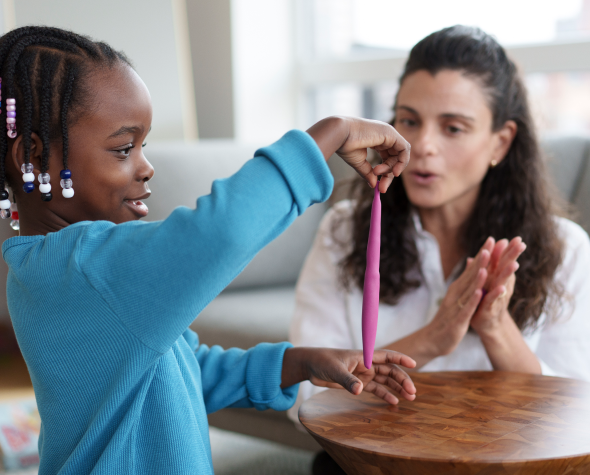
Speech and feeding therapy for children and families in Brooklyn and Manhattan
ContactStart your child’s speech and feeding therapy journey today. Reach out to schedule a complimentary phone consultation.
Let’s Talk