
April 23, 2026
Speech in Bloom
Your toddler points at something, looks at you with big eyes, and tries so hard to find the words. You feel it too. That moment of wanting to help but not knowing quite how is one of the most common things parents share with us when they first reach out.
At Speech in Bloom, we are a licensed, board-certified pediatric speech and feeding therapy collective serving families across Brooklyn and Manhattan. Our whole-child, play-based approach is built on the belief that meaningful progress happens in real-life settings, not just in a therapy room. We have spent years helping families turn everyday moments into powerful opportunities for communication growth.
In this article, we walk you through practical speech therapy at home exercises and activities designed for toddlers, what signs to watch for, and how to create a home environment where language can truly grow.
Home is not just a backup to the therapy room. For toddlers, it is where real communication lives. The familiar faces, routines, and spaces that surround your child every day are exactly what make home such a rich setting for language growth. When speech practice is woven into daily life rather than saved for scheduled sessions, toddlers engage more naturally and retain skills more effectively.
Bath time, breakfast, and getting dressed, these everyday moments are packed with language opportunities. Narrating what you are doing, naming objects, and asking simple questions during these routines gives your toddler consistent, low-pressure exposure to words and phrases that matter in their world.
Children communicate best when they feel safe and comfortable. A toddler who might be hesitant in a new setting will often open up freely at home. That natural comfort reduces anxiety and creates the ideal conditions for practicing new sounds, words, and phrases without pressure.
Clinic-based therapy is valuable, but it only covers a few hours per week. Home practice fills the gaps. When parents are equipped with the right strategies, the hours between sessions become just as productive. Home and clinic work best when they work together as a connected, coordinated approach.
We believe parents are not just observers, they are active partners in their child's progress. When caregivers understand the techniques being used in sessions, they can reinforce those same skills naturally throughout the day. This continuity across settings is what drives lasting results.
For 2-year-olds especially, repetition and routine are everything. Short, consistent daily interactions build the neural pathways that support language development. You do not need a formal plan. You need presence, patience, and a few intentional moments each day.

You do not need special equipment or a therapy background to support your toddler's communication at home. What you need is intention, a little time, and the willingness to follow your child's lead. These activities are simple, flexible, and genuinely effective when practiced regularly.
Play is the native language of toddlers. During free play, get down on their level and narrate what they are doing. If they push a toy car, say "car goes fast." If they stack blocks, count with them. This kind of parallel talk builds vocabulary without any pressure to perform.
Imitation is one of the earliest building blocks of speech. Animal sounds, vehicle noises, and silly mouth movements are all fair game. When your toddler imitates a sound you make, celebrate it warmly. These back-and-forth exchanges train the listening and motor skills needed for real speech.
Reading together is one of the most evidence-supported activities for language development, according to the American Speech-Language-Hearing Association (ASHA). For 3-year-olds, point to pictures, ask "what is that?" and pause before turning the page. Let them fill in words they know. This builds both vocabulary and narrative thinking.
The dinner table is an underused speech therapy tool. Describe what you are eating, offer simple choices like "do you want the red or the green?", and give your toddler time to respond without rushing them. Mealtime language practice is natural, consistent, and built into every single day.
Songs with repetition, think nursery rhymes and action songs, are incredibly effective for 3-year-olds. Music engages the brain differently than speech alone, making it easier to learn and remember new words. Singing the same songs regularly helps toddlers internalize patterns of language in a joyful, low-stakes way.
If you are uncertain whether what you are noticing at home crosses into delay territory, our article on signs of speech delay in toddlers walks through the key milestones and red flags to know.
Home practice is powerful, but knowing when to bring in a professional is just as important. Every child develops at their own pace, and not every late talker needs formal therapy. But there are clear signs that warrant a closer look. The earlier families reach out, the more options are available, and the more smoothly progress tends to go. Early intervention, which can begin from birth to 3 years, has a meaningful impact on long-term outcomes.
These signs do not guarantee a diagnosis, but they do mean your child deserves a professional conversation. Reaching out early is always the right move.

Small changes in your home setup can make a big difference in how your child communicates. The environment your toddler lives in shapes how language develops. A few thoughtful adjustments to your daily space and habits can meaningfully support your child's speech growth between therapy sessions.
A speech-friendly home does not require a complete overhaul. Small, consistent shifts in how you interact and what surrounds your child add up to significant growth over time.
Home activities lay the groundwork, but a professional therapist brings the clinical expertise needed to help your child truly bloom. There comes a point where parental support and home exercises need the guidance of a trained specialist. At Speech in Bloom, our evaluations and therapy plans are built around each child's unique profile, not a generic checklist. To explore the full scope of what our team offers, from speech and feeding evaluations to playgroups and school-based support, visit our Services page.
Our evaluations take place in your home and typically last 60 to 90 minutes. We begin with a thorough parent interview covering your child's medical history, daily habits, sleep, feeding, breathing, and behavior, because we look at the whole child. This is followed by a direct assessment of your child's speech, language, and oral motor skills.
We send families weekly home practice guides so the work continues beyond sessions. Caregivers are equipped with specific, practical strategies tailored to what their child is working on at that moment. Progress happens when therapy and home life are aligned.
Our therapists use play-based, child-led methods that feel natural and enjoyable for toddlers. Sessions are built around your child's interests, which means engagement stays high and resistance stays low. Therapy that feels like play is therapy that works.
Look for a licensed SLP with pediatric experience, a whole-child philosophy, and a willingness to collaborate with your family and other providers. Ask about their approach to parent coaching and how they measure and communicate progress.
We offer a complimentary phone consultation to every family who reaches out. It is a no-pressure conversation where we listen to your concerns, answer your questions, and help you figure out the right next step for your child.

Supporting your toddler's communication at home is one of the most meaningful things you can do as a parent. The small moments, the songs, the stories, the conversations at the dinner table all add up to something significant. You do not need to have all the answers. You just need to show up, stay consistent, and know that your presence is already making a difference.
At Speech in Bloom, we are here to walk alongside you through every stage of that journey. From our holistic in-home evaluations to our play-based therapy sessions and weekly home practice guides, everything we do is designed to support the whole child and the whole family. We plant the seeds of confident communication, and we grow them together.
If you have been wondering whether your toddler could benefit from professional support, trust that instinct. Reach out for a complimentary consultation and let us help you find the clearest, most compassionate path forward for your child.
Speech therapy support at home can begin from birth. Early intervention, typically from birth to age 3, is the most impactful window for building strong communication foundations.
Short sessions of 5 to 15 minutes are most effective for toddlers. Frequency and consistency matter far more than length when it comes to building early language skills.
Parents can absolutely support speech development at home using play, reading, and routines. However, a licensed SLP provides the individualized clinical guidance that home practice alone cannot replace.
Parallel play narration, sound imitation games, simple picture books, and mealtime conversations are among the most effective and accessible activities for toddlers around age two.
Signs include limited vocabulary, unclear speech, frequent frustration when communicating, lack of conversational back-and-forth, or any loss of previously acquired words or skills.
Yes, home practice is a vital part of the therapy process. When caregivers are equipped with the right strategies, the time between professional sessions becomes equally productive and meaningful.
Session frequency is customized to each child. At Speech in Bloom, sessions typically range from one to three times per week, each lasting between 30 and 45 minutes.
Speech delay refers to difficulty with the sounds and clarity of spoken words, while language delay involves understanding and using words and sentences. Both can benefit from early professional evaluation.
Disclaimer: The information shared here is intended to educate and empower families, not to replace individualized clinical guidance. Every child's developmental profile is unique. If you have questions about your child's communication or feeding, we welcome you to connect with our team for a personalized conversation.
Sources:
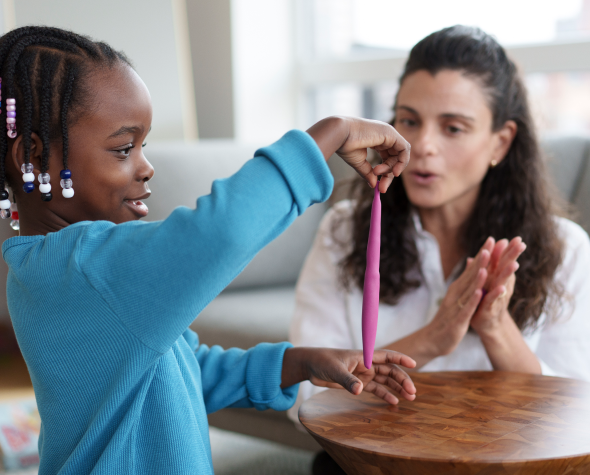
Speech and feeding therapy for children and families in Brooklyn and Manhattan
ContactStart your child’s speech and feeding therapy journey today. Reach out to schedule a complimentary phone consultation.
Let’s Talk