
March 24, 2026
One of the first questions we hear from families is, "How long does speech therapy take?" It's a natural question, and one that deserves an honest, thoughtful answer.
The truth is, there's no universal timeline. Some children make significant strides in a few months, while others benefit fro longer-term support. Speech therapy duration depends on multiple factors, including the child's age, the nature of their communication or feeding goals, how often they attend sessions, and how supported they are at home and in school.
What we can tell you is this: meaningful progress happens when therapy is personalized, consistent, and woven into the environments where children live and learn. At Speech in Bloom, we approach every child with the understanding that therapy isn't a race. It's a partnership; one that honors each child's pace while gently guiding them toward confident communication.
In this article, we’ll provide realistic expectations for speech and language therapy in regards to timeline and progress. We’ll go over all the details parents may need to know when deciding on speech therapy for their child.
When families begin speech therapy, they often hope for a clear roadmap with specific endpoints. While we always work with goals in mind, the path to reaching them varies from child to child.
Communication and feeding development are complex processes that involve the brain, muscles, sensory systems, and social-emotional growth. That's why, at Speech in Bloom, our intake process looks at the whole child — not just speech or feeding in isolation. We explore how areas like sleep, breathing, behavior, and eating habits may be interconnected with a child's communication development, because meaningful progress often depends on understanding the full picture.
Some children enter therapy with focused needs, perhaps a few speech sounds to refine or mild feeding selectivity. Others arrive with more comprehensive goals, such as building expressive language from the ground up or addressing motor planning challenges that affect speech production.
Understanding how long speech therapy takes begins with recognizing that duration reflects the child's starting point, their specific challenges, and how therapy integrates into their daily life. Our role is to assess where your child is, identify what they need, and create a responsive plan that evolves as they grow.
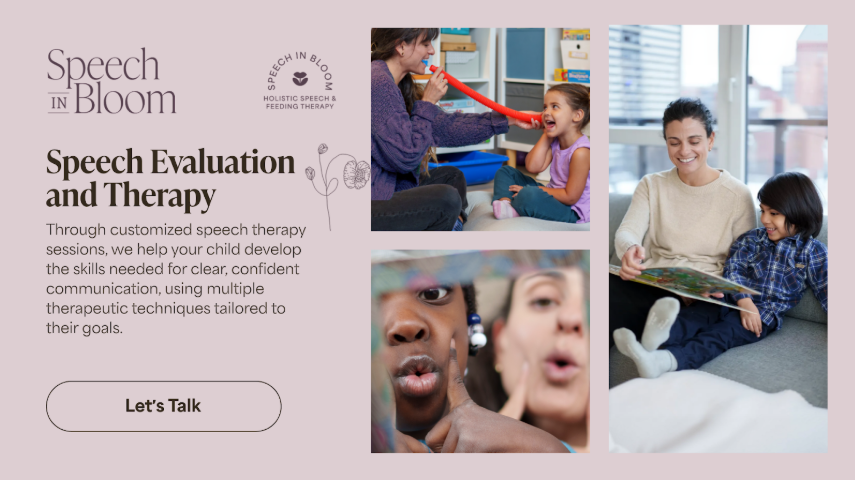
A child's age plays a significant role in determining the duration of therapy. Younger children, particularly those in early intervention (birth to 3 years), often respond quickly because their brains are in a critical period for language acquisition. Intervention during this window can prevent more complex challenges from developing and support stronger long-term outcomes.
Preschool-age children (3 to 5 years) are typically more engaged in structured activities and can participate actively in goal-setting. Their therapy may focus on building vocabulary, sentence structure, social communication, or articulation. Progress during these years tends to be steady and observable in play and daily routines, especially when caregivers consistently reinforce strategies.
School-age children (5 to 10 years) may need support with more advanced language skills such as narrative development, complex grammar, or persistent articulation patterns. At this stage, therapy duration often depends on how well skills generalize to classroom settings, academic demands, and peer interactions.
The type and intensity of your child's needs directly influence how long therapy takes. A child working on a few speech sounds may reach independence in several months to a year, while a child with childhood apraxia of speech, a motor planning disorder, may require 18 to 36 months or longer of consistent intervention.
Similarly, feeding therapy timelines vary. Mild oral motor challenges or texture aversions may resolve within 6 to 12 months, while children with significant sensory sensitivities or oral motor coordination difficulties may benefit from longer-term, gradual support that builds safety and confidence.
We assess severity not just by diagnostic labels, but by how challenges affect daily life. A child who can communicate basic needs but struggles with peer conversations has different goals than a child who is not yet using words. Both deserve support, and each will have a unique timeline based on functional impact.
How often your child attends therapy matters. Research consistently shows that children who receive therapy twice per week tend to progress faster than those attending once per week. Intensive therapy periods, such as three sessions weekly, can be especially effective for motor-based speech challenges or complex feeding goals.
However, frequency alone does not determine speech therapy effectiveness. Consistency is equally important. Regular sessions with minimal cancellations allow children to build on skills incrementally. Long gaps between appointments can slow momentum, particularly for younger children who need repetition to solidify new communication patterns.
At Speech in Bloom, we work with families to find a frequency that balances clinical recommendations with your schedule and your child's needs. Some children thrive with twice-weekly sessions, while others do beautifully with weekly therapy paired with strong home practice and caregiver involvement.
The speech therapy timeline varies based on your child’s age, goals, and level of support. Some children achieve targeted skills within months, while others require longer, steady intervention to build strong, lasting communication and feeding foundations.
Developing Social Communication In Complex Environments: Social communication goals such as interpreting nonverbal cues, maintaining conversations, problem-solving with peers, and emotional regulation often take 12 to 24 months as children apply these skills in increasingly demanding social contexts.
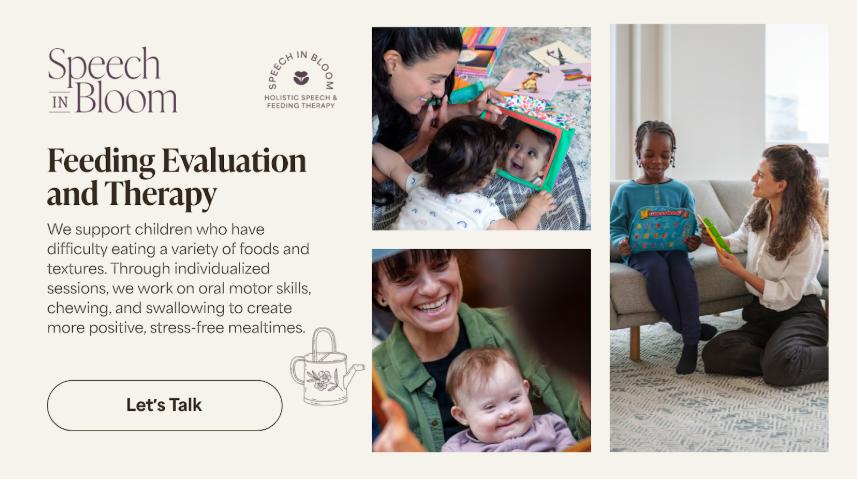
Progress is measured by meaningful change in everyday life. We look at functional communication, carryover across settings, and consistent growth over time to ensure skills are practical, sustainable, and truly improving daily interactions.
We measure progress by looking at how communication shows up in real life. Can your child request what they need? Are they using more words? Can they tell you about their day? Are they participating in conversations with peers?
Functional gains matter more than isolated skills practiced in a therapy room. A child who produces /r/ perfectly during drills but doesn't use it in conversation hasn't yet reached their goal. A child who can sequence a four-step story during therapy but struggles to recount their morning at school needs continued support for generalization.
We track these functional changes through observation, data collection, and regular check-ins with families about what's happening outside of sessions.
Parents are the best observers of progress. You notice when your child starts requesting instead of whining. You see them use new vocabulary during play. You hear speech more clearly during family dinners.
We actively seek your input during every session and through regular progress reviews. Parent-reported changes help us understand whether therapy is making a meaningful difference in your child's daily life, and whether our approach needs adjusting.
Teachers and caregivers offer valuable perspectives on how skills are emerging in group settings. Are they noticing improved participation during circle time? Can your child follow multi-step directions in the classroom? Are they engaging more with peers?
We collaborate with educators to gather this feedback and ensure therapy goals align with academic and social expectations. When everyone shares observations, we get a complete picture of progress.
Many families arrive with expectations shaped by misconceptions about how long speech therapy takes.
One common belief is that therapy should produce quick, linear results, that children should make steady, observable gains every week. In reality, progress often happens in waves. Children may show rapid improvement, then plateau while consolidating skills, then surge forward again. Growth is not always visible week to week, but skill integration is still happening beneath the surface.
Another misconception is that more therapy always equals faster results. While frequency matters, there can be a point of diminishing returns. A child attending four sessions weekly but never practicing at home may progress more slowly than a child attending twice weekly with strong family involvement and consistent daily reinforcement of strategies.
Some parents assume their child should graduate from therapy within a few months, regardless of their starting point or goals. While we always work toward independence, rushing through therapy can lead to incomplete skill development and possible regression. Strong foundations take time and thoughtful pacing.
Finally, families sometimes believe that if therapy is not showing results within weeks, it is not working. Building communication skills takes time. Brain development, muscle memory, and language growth are gradual processes. We measure progress in multiple ways, including subtle, consistent movement toward meaningful goals rather than just dramatic breakthroughs.
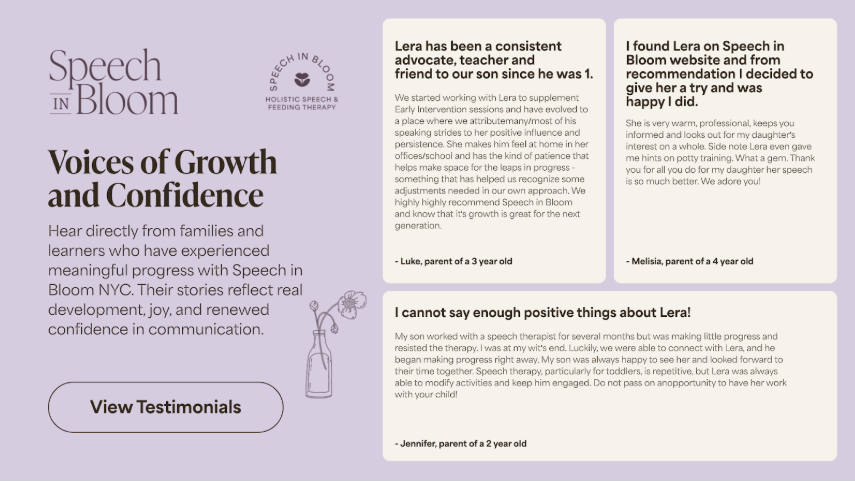
How long speech therapy takes depends on your child's unique profile, the nature of their goals, the consistency of intervention, and the strength of the partnership between therapists, families, and educators. While we can offer typical timelines based on age and needs, every child's path is individual.
What we know with certainty is that personalized, play-based therapy delivered in natural environments, paired with family involvement and collaboration across settings, creates the conditions for meaningful, lasting progress. Some children reach their goals quickly. Others need more time. Both timelines are valid and deserving of support.
At Speech in Bloom, we're committed to meeting your child where they are and guiding them toward confident communication at a pace that honors their development. Therapy duration matters less than ensuring your child has the tools, skills, and confidence to bloom.
Therapy length depends on your child’s age, developmental stage, type and severity of challenges, session frequency, home practice, and support from caregivers and teachers. Focused goals and consistent reinforcement often lead to faster, more efficient progress.
Toddlers in early intervention often attend therapy for 6 to 18 months. Mild delays may resolve within months, while more significant communication or feeding needs can require continued support throughout early childhood for steady progress.
Preschoolers typically participate in therapy for 6 to 24 months. Articulation goals may take 6 to 12 months, while language, grammar, or social communication goals often require longer, especially with complex speech disorders.
Children attending therapy more than once weekly often progress faster due to increased practice and feedback. Consistency matters just as much as frequency, since regular sessions without long gaps help maintain momentum and reinforce skills.
Family involvement accelerates progress because children practice skills during everyday routines. When caregivers consistently use therapy strategies at home, children gain more repetition and real-life application, often reducing overall therapy duration.
Yes, therapy in natural settings supports faster generalization. Practicing communication during real meals, play, and classroom activities helps children apply skills immediately, often leading to stronger carryover and shorter overall timelines.
We track progress through functional gains in daily life, including parent and teacher feedback, improved participation, clearer communication, and meaningful interaction. Real-world use of skills matters more than performance during structured drills alone.
Teachers and caregivers reinforce strategies throughout the day, creating frequent opportunities for practice. Consistent modeling, guided conversations, and structured support across environments strengthen generalization and often help shorten therapy duration.
Disclaimer: The information shared here is intended to educate and empower families, not to replace individualized clinical guidance. Every child's developmental profile is unique. If you have questions about your child's communication or feeding, we welcome you to connect with our team for a personalized conversation.
Sources:
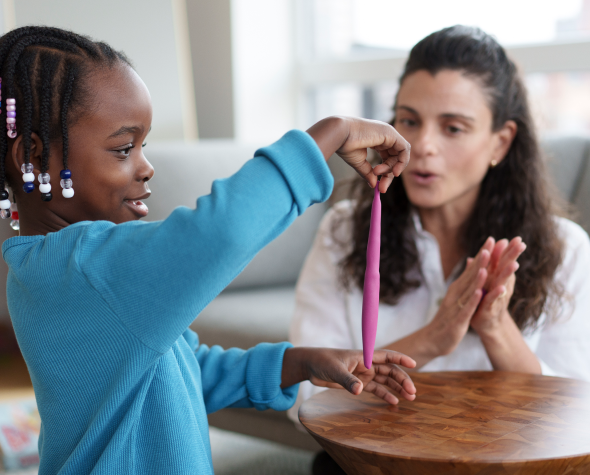
Speech and feeding therapy for children and families in Brooklyn and Manhattan
ContactStart your child’s speech and feeding therapy journey today. Reach out to schedule a complimentary phone consultation.
Let’s Talk